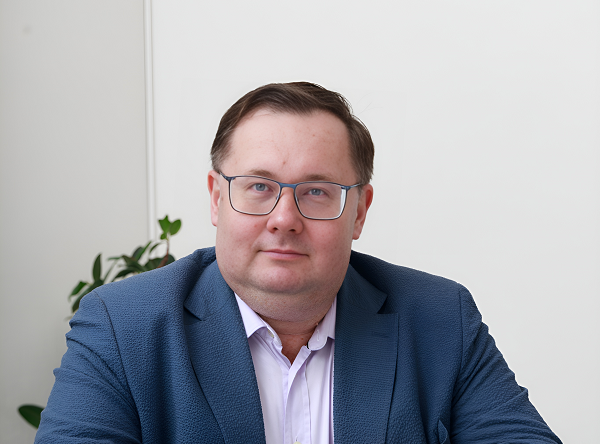
Sergey Drobyshevsky, Principal Researcher at the Gaidar Institute, prepared an author’s column for the Telegram channel "Sovereign economy." The expert discussed the transformation of the global economy and the new centers of economic activity that could emerge in the coming years.
According to Sergey Drobyshevsky, previous model of globalization, which took shape between late 1980s and early 2000s, is gradually ceasing to function. It was built on concentration of capital and technology in developed nations, offshoring of production to countries with lower labor costs, free movement of capital, and extensive international cooperation.
This process accelerated following the 2008 global financial crisis and was subsequently shaped by the pandemic, rise of China and other developing economies, and escalating geopolitical conflicts.
"Virtually all previous principles have been destroyed. Modern economies reject some of the benefits of the global division of labor, international cooperation, and expansion. While this drives up production and logistics costs, it mitigates potential losses from new geopolitical, economic, and epidemiological shocks. Countries and major companies are now prioritizing the most reliable partners and transport routes, even if these would not have been optimal in terms of cost and efficiency under the old model," noted Sergey Drobyshevsky.
According to the expert, current fragmentation of the global economy will not prove to be a sustainable long-term model. Companies and states will once again seek ways to reduce costs and boost efficiency, which will gradually result in the emergence of new centers of capital attraction and economic activity.
Sergey Drobyshevsky identified both traditional leaders: the US, Europe, and Japan, and rising economies such as China, Southeast Asia, India, Russia, the EAEU, and Africa as key players. The expert estimates that it could take another 5–10 years for the new configuration of the global economy to take shape.
Said being said, a return to the previous model of globalization is unlikely. In the long run, fully autonomous economic blocs would be less efficient than broad international cooperation, as benefits of the international division of labor and economies of scale would persist.
For Russia, this implies a need to strengthen domestic market and narrow technological gap with leading economies. However, Sergey Drobyshevsky believes that it is not wise to build a long- term strategy around current partners, logistics routes, and specific foreign trade directions, as these may change alongside the global economy. It is more important to be prepared for a new configuration of global market and secure a strong position in this structure.