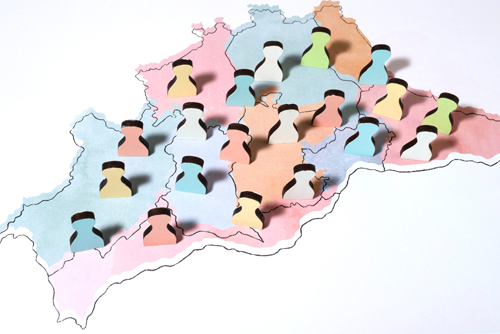
Vera Barinova, Senior Researcher of the Real Sector at the Gaidar Institute, has analyzed the specifics of the regional economic growth and explained how the same regional development factors can function absolutely differently in different territories.
The expert noted that modern economic science identifies the following main factors of economic growth in general: technological progress, level of human capital development, investment, availability and volume of natural resources, provision of infrastructure, institutional environment, and transparency of the economy.
Understanding the patterns of regional economic growth is especially important for Russia, given the significant regional disparities.
The gross regional product (GRP) usually serves as an indicator of regional economic growth, an indicator that reflects the total added value of all products and services created in the region. Not only absolute values of GRP are important for the analysis of economic development, but also the rate of its growth.
Regional economic growth is influenced, among others, by a number of spatial factors:
- economic and geographical location (proximity to markets, transport corridors, etc.);
- agglomeration effects (concentration of production, knowledge, labor resources, etc.);
- interregional ties (trade, migration, diffusion of innovations between regions, etc.).
Vera Barinova emphasized that influence of the same factors may differ for different regions, for example:
- The effectiveness of investments in R&D depends on the absorption capacity of regions, i.e. the ability to adopt, assimilate, use and disseminate innovations. This capacity is formed depending on the availability of skilled labor, level of human capital development, innovative firms and institutional support and access to major markets. The easier a region adopts and implements new technologies, the higher its economic growth rate can be.
- Research and development (R&D) expenditure in lagging regions does not have a significant positive impact on economic growth in the short term due to the diversion of resources from current production.
- Technologies may exhibit diminishing returns, thereby having a greater impact when introduced for the first time, while regions with higher levels of economic (and technological) development may experience declining marginal productivity of technologies.
Moreover, growth of regions depends not only on its internal factors, but also on neighboring regions:
- Rise in the growth rate of neighboring regions contributes to an increase in the growth rate of the region in question.
- Rise in the level of technological development of neighboring regions increases the level of technological development in the region under consideration and, as a result, contributes to its economic growth.
- Sensitivity of economic growth vs. growth of other regions depends on the
socio-economic performances of that region. For example, a region surrounded by rapidly growing territories grows more intensively the greater its population density; the higher the level of urbanization, the smaller its area.
The expert noted that many of the listed patterns are true for Russia and have been tested on Russian data. The study of regional economic growth factors is of particular importance in the context of Russian reality, marked by pronounced heterogeneity in the levels of