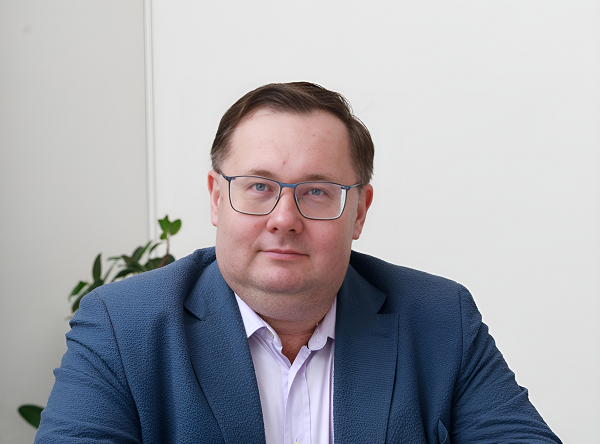
Rosstat estimated the size of Russia's non-observed economy at 10.9% of GDP by the end of 2024. Of this, 2.6% of GDP accounts for shadow operations of companies, and another 8.3% for the informal sector and households’ production. Sergey Drobyshevsky, Principal Researcher at the Gaidar Institute, explained what is behind these figures.
The non-observed economy (NOE) includes activities that cannot be directly measured by statistics. Since 2018, its share of GDP has decreased from 11.7% to 10.9%. Over the same period, the share of shadow corporate operations decreased from 4% to 2.6%, while the share of informal sector and households’ production increased from 7.7% to 8.3%.
According to Sergey Drobyshevsky, the term "shadow economy" in this case is broader than it might seem. In national accounts, it also encompasses legal activities that are difficult to directly account for in statistics.
"The shadow economy exists in all countries, including the most developed and transparent ones. Its size largely reflects the ability of statistical agencies to account for all economic activity. For Russia, the figure of 10-12% of GDP is relatively low and typical of the most developed industrialized countries.
The decline in the share of shadow business operations can be attributed to digitalization, increased economic transparency, and improved tax administration. The growth of the informal sector and households’ production, in turn, is consistent with the expansion of the self-employed regime and gradual transition of these activities into the formal sector. "Housing rentals, production on private farms, and personal services are inherently difficult to fully capture statistically, so this part of the economy will always exist," explained Sergey Drobyshevsky.
Экономист отметил, что эти данные позволяют оценивать полноту статистического учета и изменения в структуре экономической активности.