
Yesterday, May 13, the cozy “Library on Gazetny” hosted the second public lecture by the Gaidar Institute. The topic of the lively discussion was an issue that currently concerns experts, businesses, and regulators alike: “Cryptoeconomics in Russia: Protection not Development.”
The conversation was prompted by the publication in April 2026 of a draft law on the regulation of digital currencies in Russia. The document provides for the possibility of conducting foreign trade settlements in digital currencies and also establishes an infrastructure in the country for investment and cryptocurrency trading. However, are these measures sufficient for real progress in the industry? This was discussed by the institute’s experts, invited speakers from the business community, and the audience members themselves.

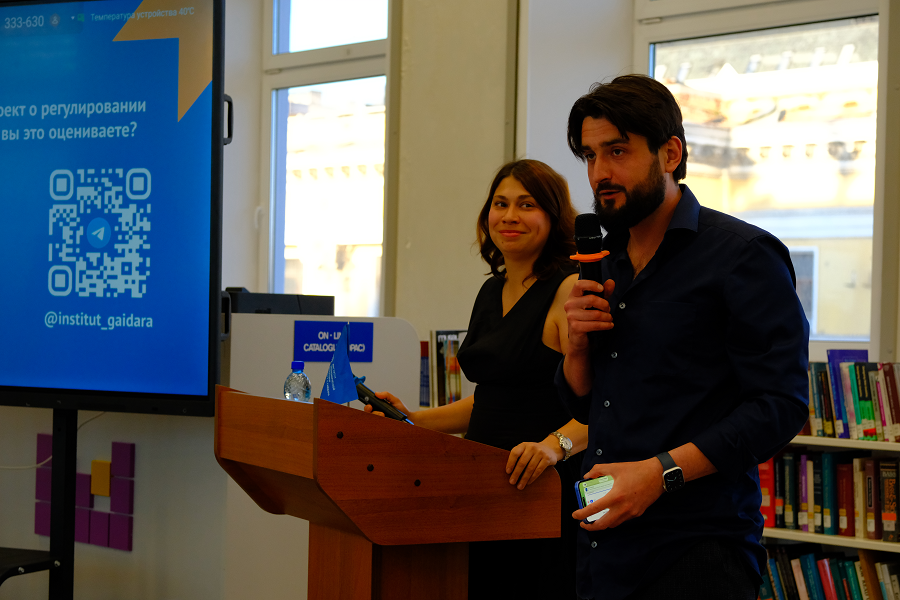
The speakers included representatives of the Gaidar Institute’s Laboratory for the Analysis of Best International Practices: Antonina Levashenko, head of the laboratory, and Ivan Ermokhin, a research fellow. They presented their own analysis of the bill and argued why the state cannot afford to ignore the development of the crypto-asset market.
In support of this, experts cited global statistics:
- Globally, an average of 41% of adults are aware of cryptoassets.
- In the U.S., Canada, and the U.K., 44% of Generation Z (born between 1997 and 2012) have already made their first investments in cryptoassets.
- According to forecasts, by 2030 stablecoins could account for 12% of the global volume of cross-border payments (~$1 out of every $8 transferred).
- Fiscal oversight is intensifying globally: on May 6, 2026 , Kazakhstan joined the automatic exchange of financial information on cryptoassets , and starting in 2027, more than 50 countries will begin exchanging data within the framework of CARF.
Significant part of the discussion consisted of presentations by invited speakers.

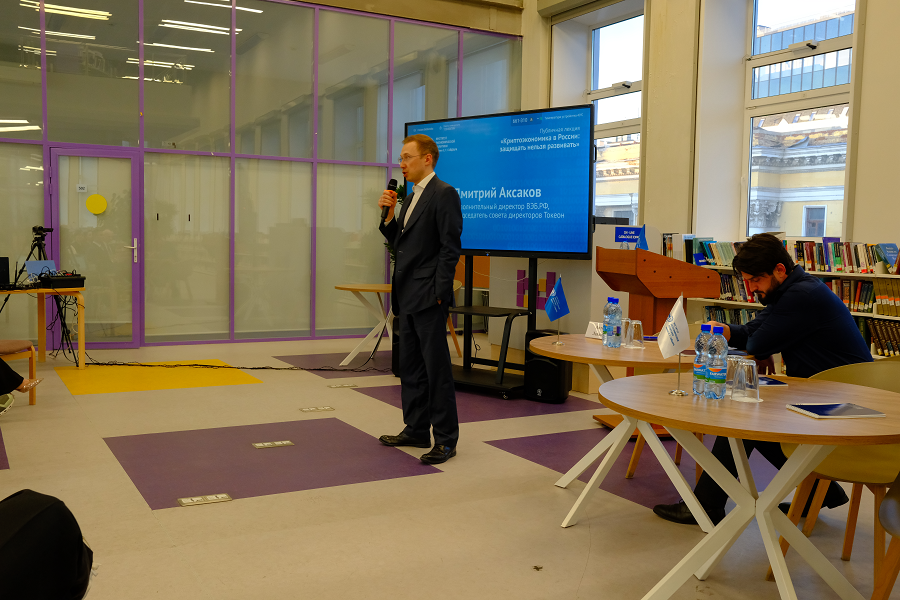
Dmitry Aksakov, Executive Director of VEB.RF and Chairman of the Board of Directors of Tokion, spoke about the prospects of the digital asset market, the integration of digital currencies into Russia’s financial system, as well as the pros and cons of the draft law from the perspective of new infrastructure players.

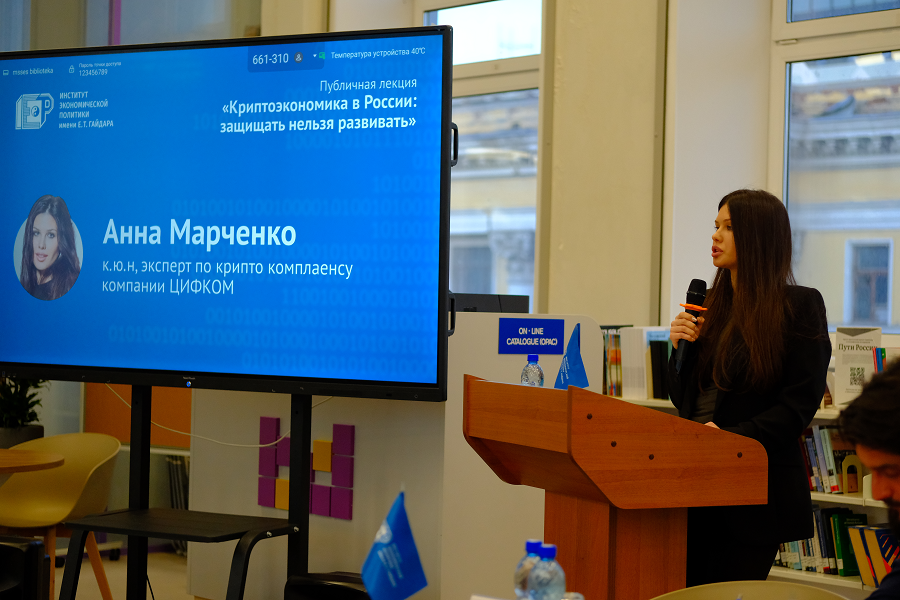
Anna Marchenko, Ph.D. in Law, an expert on crypto-compliance at the company “CIFCOM,” focused on issues of security and compliance with international standards. She answered questions regarding the draft law’s compliance with FATF requirements, how it will help combat crimes in the crypto sphere, and what the future of the Russian crypto industry will look like if it is enacted.
The Gaidar Institute thanks the speakers and guests for the substantive discussion and invites you to follow announcements of upcoming lectures at the “Library on Gazetny.”