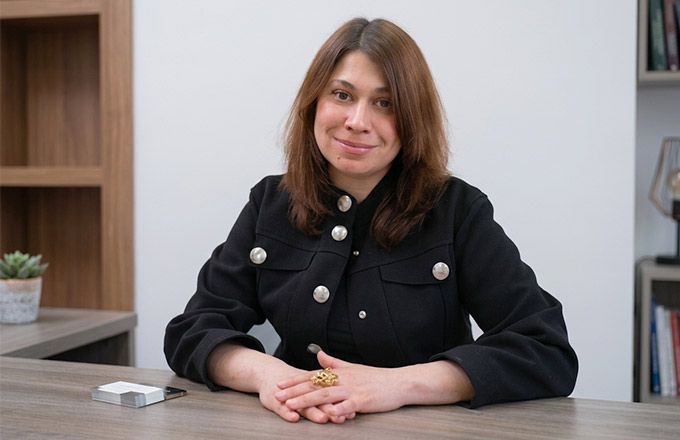
Antonina Levashenko, Head of International Best Practices Analysis Department at the Gaidar Institute, discussed the prospects for cooperation between Russia and the EU in the metallurgical industry in an interview with Pro Metall, the consequences of sanctions policy for Russian steel and non-ferrous metal exports, and the areas of cooperation between the parties that are still relevant.
— As an international relations expert, can you explain how Europe is now coping without Russian metals due to sanctions? How has this affected businesses and Europeans?
— As for sanctions on metals, they did not have a critical impact on Europe because the approach was consistent: restrictions were imposed on metal markets where it was easy to find substitutes. For example, the sanctioned copper market has, in principle, had many alternative suppliers for the EU besides Russia, including Chile, Peru, the Democratic Republic of the Congo, as well as China, the United States, Indonesia, and others.
However, even for products that were more difficult to replace, the EU adapted, reducing imports before imposing sanctions. According to Eurostat, before the introduction of aluminum sanctions, Russian primary aluminum imports into the EU had significantly declined by 2026, from 2023 to 3% of all EU aluminum imports by 2025. The same is currently happening in the nickel market. The EU has not yet imposed specific sanctions on nickel, as the market remains sensitive to shortages and sharp price fluctuations due to the relatively small number of players in the global market. However, according to Eurostat, supplies from Russia have declined significantly. The share of Russian nickel in EU imports has fallen by 19% over 4 years to 2025, and the United States has now become the largest supplier of nickel.
Replacing Russian unprocessed titanium may be the final pressing issue; two-thirds of it in Europe is used to produce aircrafts, including military ones, and the EU is unlikely to be ready to completely switch to titanium from Kazakhstan and Japan, although it may do so in the future.
Therefore, the current problem for EU industry is not specifically the sanctions on metals, but rather the sanctions on Russian energy resources, which are making electricity and secondary metal processing at European plants, including scrap metal recycling, several times more expensive. This increases costs and prevents the EU from fully establishing its own final metal processing industry, thereby reducing its dependence on China.
Sanctions on Russia also have consequences in terms of more expensive imports from other countries, as well as simply developing shadow businesses through "schemes" in third countries. As a result, re-exports of Russian metals still go through Turkey, China, the CIS, ets. Some producers are simply relocating their smelters (Norilsk Nickel plans to open separate copper production facilities in China starting in 2027), which ultimately doesn't prevent them from once again supplying to Europe, even if they are localized, such as a new Chinese company. Where and how, in such a case, will a European importer look for a "Russian trace" in the chain?
— Are there any prospects at all for Russian metals in the EU?
— The EU will continue to strive to continue its policy of “raw materials sovereignty” (independence from external supplies, primarily from Russia and China) by changing import destinations, including by signing agreements with Russia-friendly Uzbekistan (in 2024) and Kazakhstan (in 2022) on joint metals projects. For example, in 2024, the EBRD invested €3 mn in the Sarytogan project in Kazakhstan with the goal to create one of the largest graphite deposits in the world, receiving a 7.36% stake in the company.
It's worth noting that Russian metallurgical companies may be forced to take action due to the trade impact of environmental measures. Firstly, there is a risk of a global expansion of the cross-border carbon tax system both in the EU, where it has already been introduced for importers in 2026 (currently only applies to pig iron, steel, and aluminum), and in other countries. Other countries are developing similar systems. For example, the US already has a carbon tax on imports, and the UK plans to introduce a cross-border carbon tax starting in 2027. Similar measures are being considered in Australia, South Korea, Canada, and Taiwan. Such a tax could serve as a protective measure against imports.
— Pro Metall reported that the World Bank predicts commodity prices will rise by up to 16% in 2026. What could this growth mean for the Russian economy?
— The strong rise in prices for aluminum, copper, tin, and nickel this year is due to a short-term supply shortage resulting from several key factors in this group of metals:
1) Supplies of aluminum and nickel were disrupted due to shipping in the Strait of Hormuz, and imports of two important types of raw materials from the Middle East were reduced: alumina for aluminum production, as well as sulfur used for leaching nickel ore.
2) Demand for copper, aluminum, and tin has increased in certain sectors: active construction of data centers around the world due to the AI launch race, as well as opening of new renewable energy sources, i.e., solar panels, wind turbines, due to rising energy costs.
3) Nickel price volatility was impacted by the introduction of export restrictions, i.e., a 30% reduction in nickel ore mining quotas in Indonesia in 2026. Moreover, according to the same World Bank's forecasts, the metal price index is expected to decline again by 7% by 2027 if the conflict in the East, which has been driving the main volatility, subsides.
However, global dependence on resources is currently changing: therefore, prices for a separate group of "critical metals" (primarily aluminum, lithium, cobalt, nickel, copper, graphite, and rare earth metals) will only rise.
The main reasons are as follows:
1) The energy transition from traditional energy sources, which has now accelerated due to high oil prices, requires metals for the production of electric vehicles, solar panels, wind turbines, power transmission infrastructure, and energy storage systems.
2) The demand for metals is growing in AI and electronics, where they are needed for data centers, high-performance chips, etc.
3) Defense spending is also growing, as many countries, such as the EU, are stepping up their military industrial policies, and metals such as tungsten, titanium, and gallium will be needed for various weapons systems.
Concentration of supplies in certain countries remains a problem. For example, due to Indonesia's trade restrictions in 2022, the nickel price increased by 270% in 3 days, while, according to the OECD (Organization for Economic Cooperation and Development), ProMetal cites that export restrictions on metals on the whole have increased fivefold since 2009.
Therefore, there is a pressing need for funds in recycling technology, launching of new plants, and research of chemicals capable of replacing certain elements (for example, in batteries), so that dependence is not so concentrated in certain groups of countries. It is crucial to involve various countries in metal supply chains in order to reduce price volatility in the long term.
As for Russia, the picture is mixed. For example, Russia's nickel industry is not experiencing a shortage; Russia accounts for approximately 5.7% of global nickel production, according to Rosnedra. However, the global market relies primarily on Indonesia, which currently meets global demand. Therefore, demand for Russian nickel will depend on the future demand, and according to IEA (International Energy Agency, Pro Metall cites) data, nickel demand is expected to increase by at least 20% by 2040.
At the same time, Russian aluminum and tin production faces issues concerning raw material quality, and solutions depend primarily on the introduction of new capacity and investment. For example, while aluminum has sufficient raw material reserves, new alumina processing plants need to be commissioned. Currently, only a portion of Russian bauxite and nepheline is used due to low quality of the ores and weak infrastructure, with the bulk imported from other countries, including the Middle East.