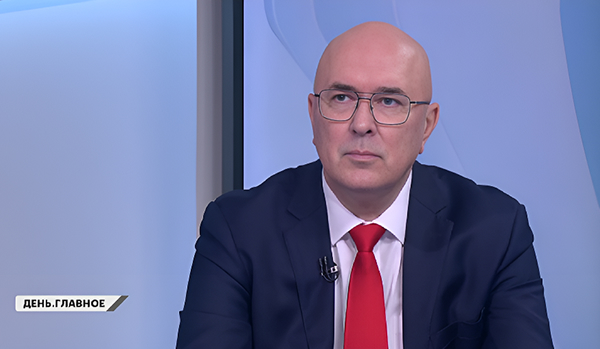
Alexey Vedev, a leading researcher at the Gaidar Institute's Financial Research Department, took part in a special project by RBC “The Day. Essentials”, which was all about “The Russification of Business: What It Is.” In the February 26 edition, the expert provided detailed comments on the new rules for business, the prospects for entering foreign markets, and structural changes in the Russian economy.
Alexey Vedev noted positive structural shifts in the Russian economy over the past five years. In his opinion, the country is transitioning to a “two-tier model”: “On the one hand, we have a safety net in the form of a raw materials economy, and on the other hand, we are developing know-how, and we can safely develop a knowledge economy while having a raw materials safety net,” he said.
The expert emphasized that it is hardly appropriate to call Russia a “gas station” now: the non-resource sector is actively developing, generating more taxes and creating jobs. Commenting on the upcoming changes to fines for signs in foreign languages starting March 1, Alexei Vedev called this measure “probably not very justified,” but temporary. “Signs are secondary, I think this will pass,” he concluded, adding that this would not close the door to the global market.
Speaking about doing business in the current environment, the expert acknowledged that the high cost of money and the volatility of the ruble are pushing businesses toward a “rentier” model (saving rather than investing). Nevertheless, focusing on foreign markets is necessary as a confirmation of product quality. The state should help businesses enter new markets, such as Southeast Asia.
Speaking about Russia's potential in forming its own standards, Alexey Vedev expressed confidence that the country is capable of achieving success in this area, primarily thanks to technological development. As clear examples of competitiveness, he cited Russian animation, which is now a world leader, as well as achievements in the field of software and artificial intelligence. According to the expert, engineering and intellectual solutions are becoming the basis for promoting Russian standards. In addition, he noted that Moscow has already established itself as a global brand, securing its status as one of the best cities in the world.
In his forecast for 2030, Alexei Vedev suggested that sanctions will remain in place, but Russia will be forced to move towards a knowledge-based economy. With stable rules of the game and moderate money costs, this will allow the country to grow by 4-6% annually without the risk of overheating.