The Flip Side of Free: Understanding the Economics of the Internet
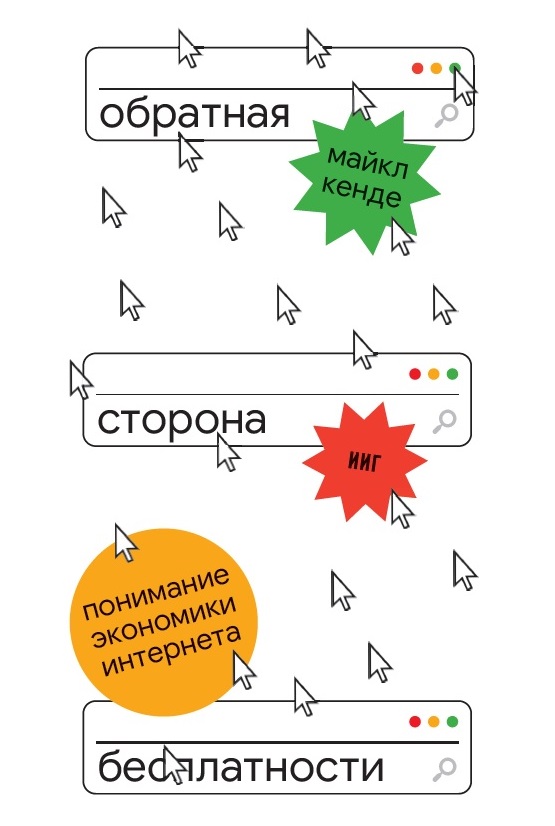
Michael Kende
Translated fr om English by Aleksei Rezvov. – Moscow: Gaidar Institute Press, 2027. – 408 p.
ISBN 978-5-93255-740-2
The front side of the Internet is free Wi-Fi in coffee shops, video calls, and nearly unlimited data for downloading and streaming. But there is also a flip side: our data ends up in the hands of companies that profit from it; our financial information may become accessible to hackers; and the market power of high-tech companies continues to grow. In The Flip Side of Free, Michael Kende shows that we do, in fact, have to pay for the free internet.
Kende explains the internet’s unique economic model and the accompanying paradoxes – its consequences. Today, the world’s most valuable companies are internet companies built on digital data, which is often exchanged for free content and services. Many users are aware of how this affects their privacy, but they continue to use these services nonetheless. Moreover, although the internet lowers the barriers preventing companies from entering markets, it is difficult to compete with the largest service providers. We complain that companies have too much data, but in developing countries, wh ere internet use has not yet become widespread, the opposite problem may arise: not enough data is being collected to develop advanced services – and this exacerbates the problem of unequal access to data between developed and developing countries.
What does the future hold for “free” services? Data is the price of free services and the new currency of the Internet age. “Free” isn’t necessarily a bad thing, says Kende, as long as we recognize and try to mitigate its downsides – the flip side of “free.”