
On October 6, Library on Gazetny hosted a public lecture "Understanding China through comparison: rich and poor regions and their migrants". Tatiana Ivakhnenko and Deni Sugaipov, Researchers of the Mathematical Modelling of Economic Processes Department at the Gaidar Institute, spoke at the event. Lectures showed significant spatial differentiation of the China’s regions and considered the role of internal migration in the economic development of the country.
Tatiana Ivakhnenko devoted her presentation to the territorial division of China. She examined the administrative-territorial structure and population geography in detail, clearly demonstrating the significant disparities in Gross Regional Product (GRP) levels across the regions. The expert analyzed the spatial structure of the energy sector and primary oil- producing areas. Particular attention was paid to the causes of persistent regional disparities, the "reform and opening-up" policy, and special economic zones. She concluded her presentation by asking whether the economic structures of China's regions are converging over time.

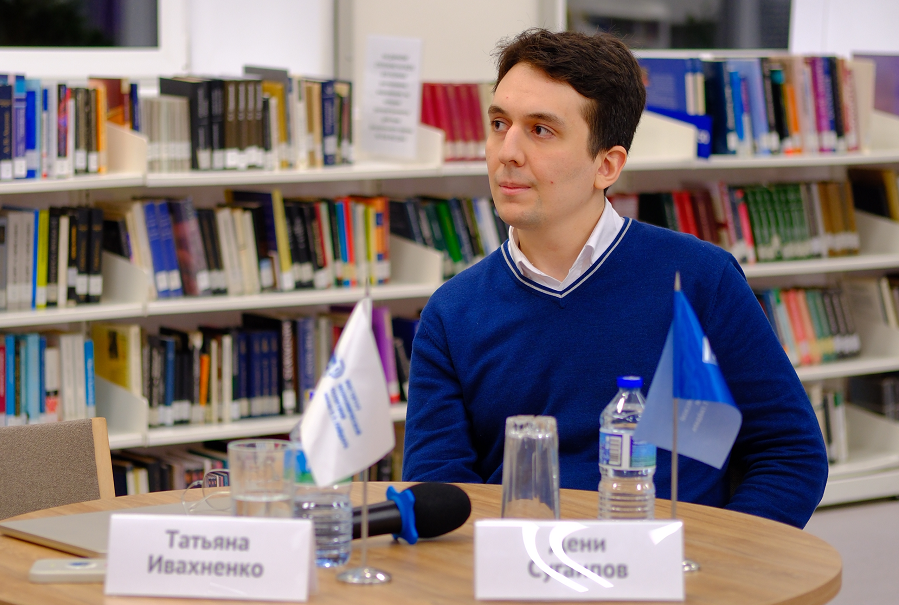
Deni Sugaitov continued the lecture by shifting the focus from geography to people. He discussed the scale of internal migration and specific Chinese context, namely, who exactly is classified as a migrant in the PRC. The expert traced the history of the “hukou” system, the Chinese household registration system, that once determined access to food and employment in cities other than one’s own. He also explained how this registration system has evolved and how it operates today. A separate section was dedicated to the phenomenon of “chunyun,” massive annual migration period prior to the Lunar New Year, when the entire country travels home.


Thank you to everyone who attended the lecture and actively participated in the discussion!